In short: porcelain is the toughest, most water-resistant choice for kitchens, bathrooms and hallways; ceramic is lighter and more affordable and ideal for walls; and luxury vinyl tile (LVT) is warmer, quieter and quicker to lay, but less resistant to heavy point loads and heat. Whatever you choose, the floor underneath must be flat and stable — preparation decides how long any floor lasts.
Choosing a floor for a kitchen, bathroom or hallway is not just about looks. In a busy North East home — with wet boots, dogs, children and the occasional dropped pan — the wrong choice can crack, scratch or lift within a couple of years. Here is how porcelain, ceramic and LVT compare, and where each one works best.
Porcelain tiles
Porcelain is made from fine, dense clay fired at very high temperatures. It absorbs very little water, which makes it extremely hard-wearing and suitable for almost anywhere, including bathrooms, kitchens, hallways and even outdoor patios with the right tile.
- Pros: very durable, water-resistant, stain-resistant, available in large formats and realistic marble, stone and wood effects.
- Cons: heavy, harder to cut, cold underfoot without underfloor heating, and needs a very flat, rigid surface.
- Best for: hallways, kitchens, bathrooms, open-plan living areas.
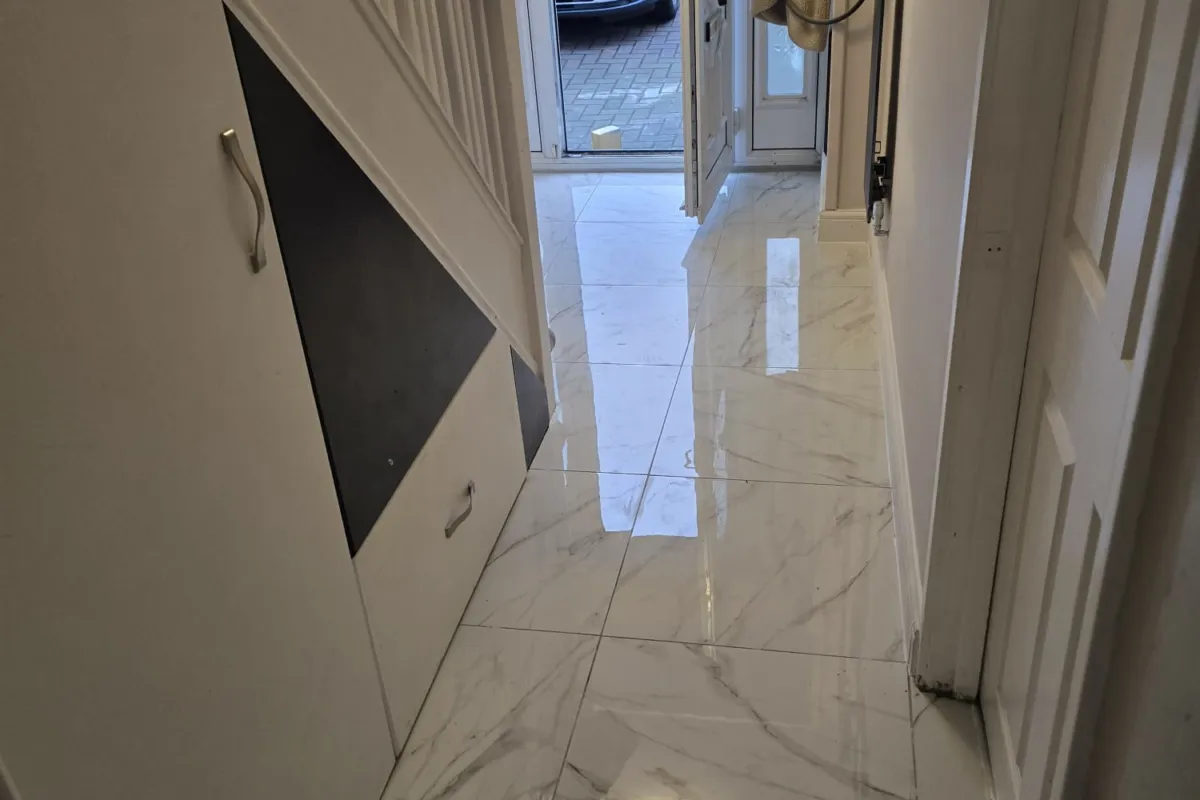
Large marble-effect porcelain tiles are one of the most popular choices we lay in hallways and kitchens — they give a high-end look with very few grout lines.
Ceramic tiles
Ceramic tiles are made from coarser clay and fired at lower temperatures. They are lighter, easier to cut and generally cheaper than porcelain, but they absorb more water and are less hard-wearing.
- Pros: affordable, easy to cut and fit, huge choice of colours and patterns.
- Cons: more prone to chipping, not ideal for heavy-traffic floors or outdoors.
- Best for: bathroom and kitchen walls, splashbacks, light-traffic floors.
Luxury vinyl tile (LVT)
LVT is a multi-layer vinyl product with a printed design and a protective wear layer. Modern LVT looks remarkably like wood or stone and comes as glue-down tiles or click-together planks.
- Pros: warm and soft underfoot, quieter than tiles, water-resistant, quicker to install, often works over existing floors once they are levelled.
- Cons: can be dented by heavy furniture or dropped objects, can fade in strong sunlight, and only suits underfloor heating within the manufacturer’s temperature limits.
- Best for: kitchens, bathrooms, flats where noise matters, and rooms where speed of fitting is important.
Side-by-side comparison
| Porcelain | Ceramic | LVT | |
|---|---|---|---|
| Durability | Excellent | Good | Good |
| Water resistance | Excellent | Good (glazed) | Very good |
| Warmth underfoot | Cold | Cold | Warm |
| Noise | Hard / echoey | Hard / echoey | Quiet |
| Ease of installation | Skilled | Moderate | Quicker |
| Underfloor heating | Excellent | Very good | Within limits |
Slip resistance in bathrooms and kitchens
Highly polished tiles look stunning but can be slippery when wet. For bathroom floors, shower areas and kitchens, look for tiles with a suitable slip rating (manufacturers often quote an R rating or a pendulum test value) or choose a matt or textured finish. Smaller tiles with more grout lines also give better grip in walk-in showers.
Preparation: the part nobody sees
Most failed floors fail because of what is underneath. Before any tile or vinyl goes down:
- Timber floors should be screwed down and over-boarded with plywood or tile backer board to stop movement cracking tiles and grout.
- Concrete floors must be dry, sound and level — new screed needs time to dry out fully.
- Uneven floors are levelled with a self-levelling compound, especially for large-format tiles and LVT.
- Movement joints are left at doorways and around the edges, as the manufacturer recommends.
This is why two tiling quotes can look so different — one includes proper preparation and the other does not.
Which floor should you choose?
- Hallway: porcelain — it handles wet shoes, grit and heavy traffic.
- Kitchen: porcelain for durability, or LVT for warmth and comfort.
- Family bathroom: porcelain or LVT with good slip resistance.
- Upstairs flat: LVT, to reduce noise for neighbours below.
- Rental property: durable LVT or porcelain that is easy to clean and repair.
Tiling and flooring in Newcastle and the North East
Our tilers lay porcelain, ceramic and LVT floors in homes across Newcastle, Gateshead, Sunderland, Durham and Northumberland, including all the preparation needed for a long-lasting finish. See our marble-effect porcelain hallway, find out more about our tiling and flooring service, or get a free written quote.
Frequently asked questions
Is porcelain better than ceramic for floors?
For most floors, yes. Porcelain is denser, absorbs less water and is more hard-wearing, which makes it ideal for kitchens, bathrooms and hallways. Ceramic is great for walls and lighter-traffic areas.
Can LVT go in a bathroom?
Yes. Good-quality LVT is water-resistant and warm underfoot, which makes it a popular bathroom floor. It must be laid on a flat, well-prepared surface.
Can you lay tiles on a wooden floor?
Yes, but the floorboards must be secured and over-boarded with plywood or tile backer board to stop movement cracking the tiles and grout.
Which floor is best with underfloor heating?
Porcelain and ceramic tiles work extremely well with underfloor heating. LVT can also be used, but only within the manufacturer's maximum temperature.
Topics: Interiors