In short: the right order for a full house renovation is: survey and plan, strip-out, structural work, roof and windows (making the house watertight), first-fix plumbing, heating and electrics, plastering, then second fix — kitchens, bathrooms, flooring and decorating — and finally the outside and garden. Working “from the outside in and from the structure out” avoids redoing work and saves money.
Renovating a whole house — whether it is a tired family home in Gosforth, an inherited property in Sunderland or a run-down terrace you have just bought in Gateshead — can feel overwhelming. The secret is doing things in the right order. Get the sequence wrong and you end up chasing new plaster for cables or ripping up a new floor to fix a pipe. Here is the order we follow on full refurbishments across the North East.
Stage 1: Survey, budget and plan
Start with a thorough look at the whole property: the roof, walls, damp, windows, wiring, plumbing, heating and drainage. Older houses in our region often have hidden issues such as old wiring, lead pipes, failed damp-proofing or rotten timbers. Find these early, because they come first in the budget, before any kitchens or finishes.
This is also when you check whether you need planning permission, Building Regulations approval or party wall agreements — see our guide to planning permission for extensions. Keep a contingency of 10 to 15 percent of your budget for the unexpected.
Stage 2: Strip-out
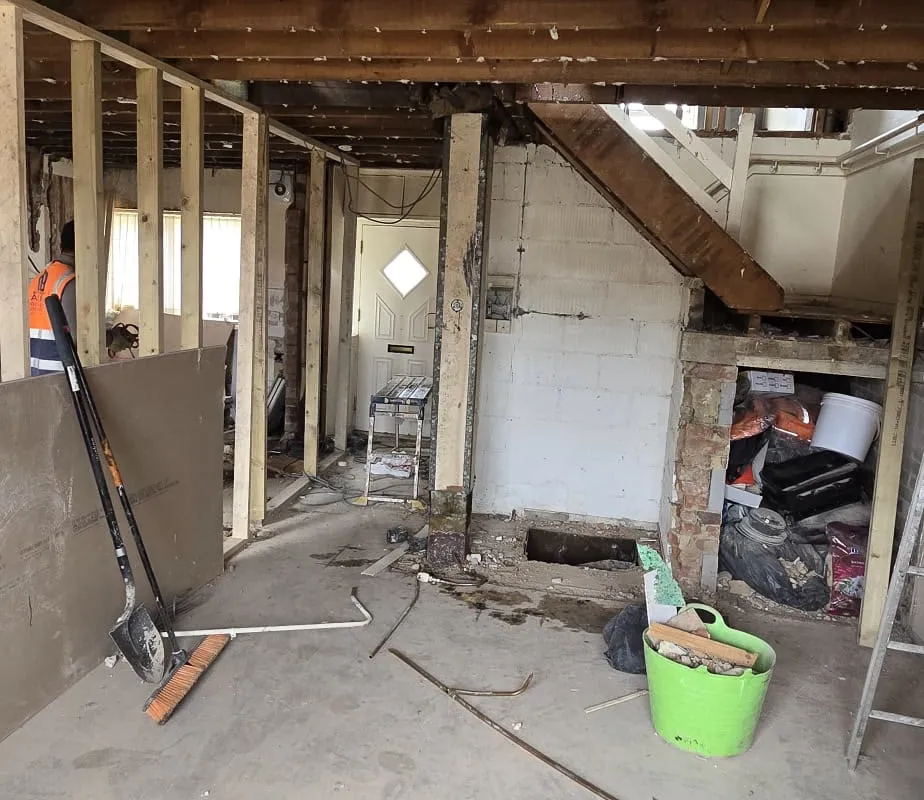
Remove everything that is being replaced: old kitchens, bathrooms, flooring, damaged plaster, redundant walls and fittings. A full strip-out lets you see exactly what you are working with, and it is far easier to do it all at once than room by room.
Stage 3: Structural work
Next come the big changes: removing or building walls, fitting steel beams, extensions, repairs to joists and floors, and any underpinning. Structural work needs the right calculations and Building Control approval and must be done before anything else is fitted.
Stage 4: Make the house watertight
Fix the roof, chimneys, gutters and any leaks, and replace windows and external doors if needed. There is no point plastering and decorating inside a house that still lets in water. In the North East this stage is especially important before winter.
Stage 5: Damp treatment
Damp is common in older Tyneside properties. Identify the real cause first — leaking gutters, high ground levels, condensation or a failed damp-proof course all need different solutions. Fix the cause before you plaster.
Stage 6: First fix
With the structure sound and the house dry, the “hidden” services go in: new pipework, waste runs, heating pipes and radiator positions, electrical cables, data and TV cabling, and extractor ducting. Plan where every socket, switch, light and radiator will go now — moving them after plastering is messy and costly. Electrical work must be carried out and certified by a qualified electrician, and gas work by a Gas Safe registered engineer.
Stage 7: Insulation and plastering
A renovation is the best time to improve insulation in lofts, walls and floors, which makes the house warmer and cheaper to heat. Then walls and ceilings are plaster-boarded, skimmed or re-plastered. Fresh plaster needs time to dry before it is decorated.
Stage 8: Second fix — kitchens, bathrooms and joinery
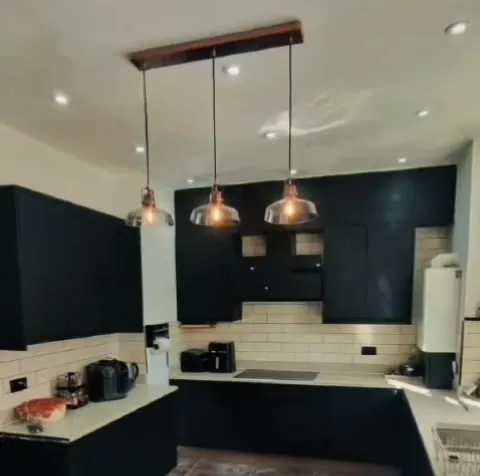
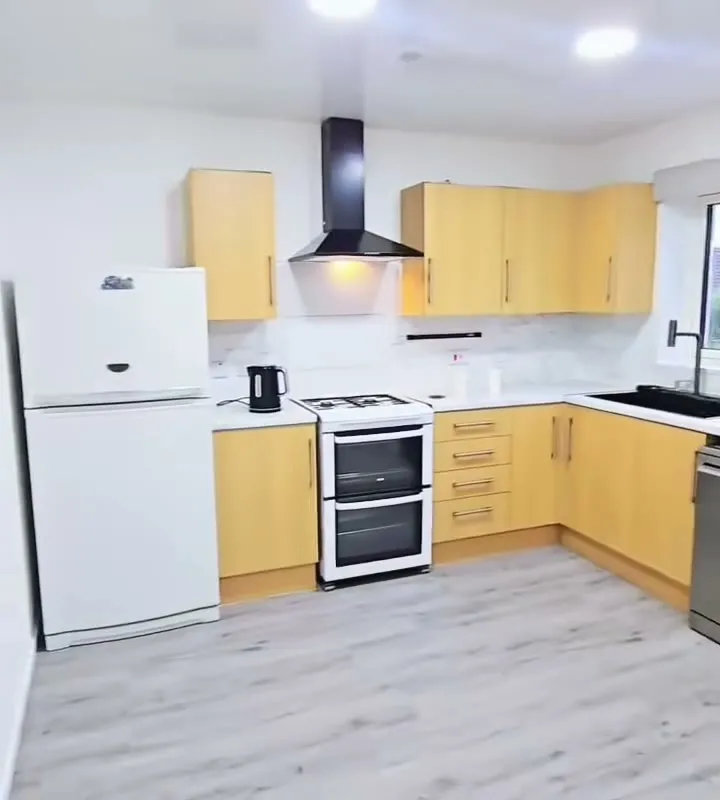
Now the house starts to look finished: kitchens and bathrooms are fitted, doors and skirting boards are hung, staircases are refurbished, and sockets, switches, lights and radiators are connected. Our guides to bathroom renovations and kitchen fitting explain those stages in more detail.
Stage 9: Flooring and decorating
Tiled floors in kitchens, hallways and bathrooms are often laid before units are fitted, but carpets and most final floor finishes go down near the end to protect them. Painting and decorating come last inside, followed by a thorough clean.
Stage 10: Outside and garden
Driveways, patios, fencing and garden rooms are usually saved for the end, because skips, scaffolding and deliveries would damage them. If you would like to make the most of your outdoor space, see our landscaping and garden rooms service.
How long does a full renovation take?
It depends hugely on the size of the house and the work involved. A cosmetic refurbishment of a small house may take a few weeks, while a full renovation with structural changes, a new kitchen and bathrooms, rewiring and re-plastering will often take several months. Your builder should give you a written programme with key stages and dates.
Can I live in the house during a renovation?
For smaller projects, yes — we work room by room and keep the house usable. For a full renovation with rewiring, plastering and the kitchen and bathroom out at the same time, most people find it much easier to stay elsewhere for at least part of the work. It is also usually quicker and cheaper for the builder to work in an empty house.
Why one team makes a difference
The biggest headache on a full renovation is co-ordinating different trades. When the joiner is waiting for the plumber and the plasterer is waiting for the electrician, jobs drag on for weeks. Using one company with its own team for every trade means one schedule and one person responsible for getting it right.
Our in-house team carries out full house refurbishments for homeowners, landlords and businesses across Newcastle, Gateshead, Sunderland, Durham and Northumberland. See some of our recent projects, then book a free site visit to talk through your plans.
Frequently asked questions
What is the correct order for renovating a house?
Survey and plan, strip-out, structural work, make the house watertight, first-fix plumbing, heating and electrics, insulation and plastering, then kitchens, bathrooms, joinery, flooring, decorating and finally the outside.
How much contingency should I allow for a renovation?
A contingency of 10 to 15 percent of the budget is sensible, especially in older properties where hidden problems are common.
Can I live in my house while it is renovated?
For smaller projects, yes. For a full renovation with rewiring, plastering and the kitchen and bathroom out at once, most people find it easier to stay elsewhere for part of the work.
Topics: Renovations